
The Silicon Library of Alexandria
Are we living through a “digital dark ageˮ? We treat the internet as humanityʼs permanent collective memory. History and physics suggest that preserving knowledge has never been so simple.
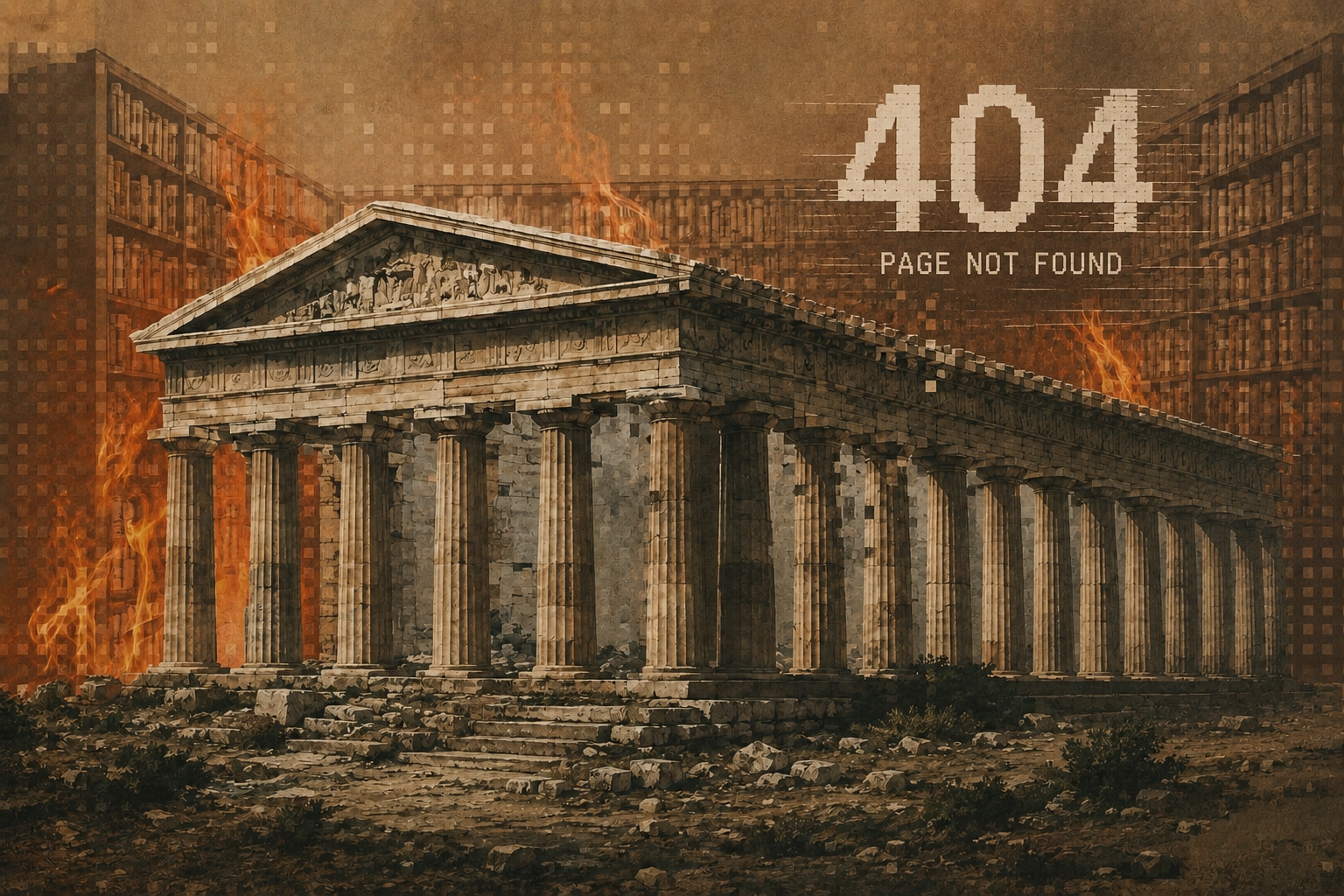
Ritual Behaviour and Canine Iconography in the Early Digital Period,
“…Among the most striking features of the surviving digital archive is the apparent cultural significance of the Shiba Inu “doge”. The animal appears with extraordinary frequency and later became the emblem of a widely circulated digital currency, suggesting it may have occupied an important symbolic or religious role in early twenty-first century society. Equally perplexing is a widespread ritualistic practice called “planking” in which individuals deliberately assumed a rigid horizontal posture atop benches, monuments and other public structures while companions carefully documented the event. Despite the remarkable prevalence of both phenomena, no contemporary explanation survives. Their original significance, if any, remains uncertain.”
Planking, of course, was not a ritual. It was simply a bizarre internet fad that swept around the world for a few months in 2011. The Shiba Inu, despite later lending its likeness to a cryptocurrency, was no sacred animal—merely the face of one of the internet’s most enduring memes. To a future historian working from fragments of our digital record, however, these distinctions might be difficult to recover. Even having lived through the period myself, there is much about internet culture that I would struggle to explain.
The scenario sounds ridiculous, but historians and archaeologists confront versions of this problem all the time. Ancient civilisations are reconstructed not from everything they produced, but from the small and often unrepresentative fraction that happened to survive. History is shaped as much by the peculiarities of preservation as by the lives people actually led.
Unlike today’s historians, the archaeologists of 2674 won’t be brushing dust from stone tablets or deciphering faded papyrus scrolls. They will know that ours was a civilisation that documented almost everything digitally. Our photographs and friendships, scientific discoveries and political arguments, shopping habits and private obsessions were all recorded somewhere online. By any reasonable measure, the early twenty-first century should become the best-documented period in human history. And yet, their future archive may prove strangely incomplete. Entire social platforms will have vanished. Family photographs may survive without names, dates or locations; scientific papers may point towards webpages that no longer exist. Even when a file itself remains intact, the software, hardware or password needed to open it may be gone.
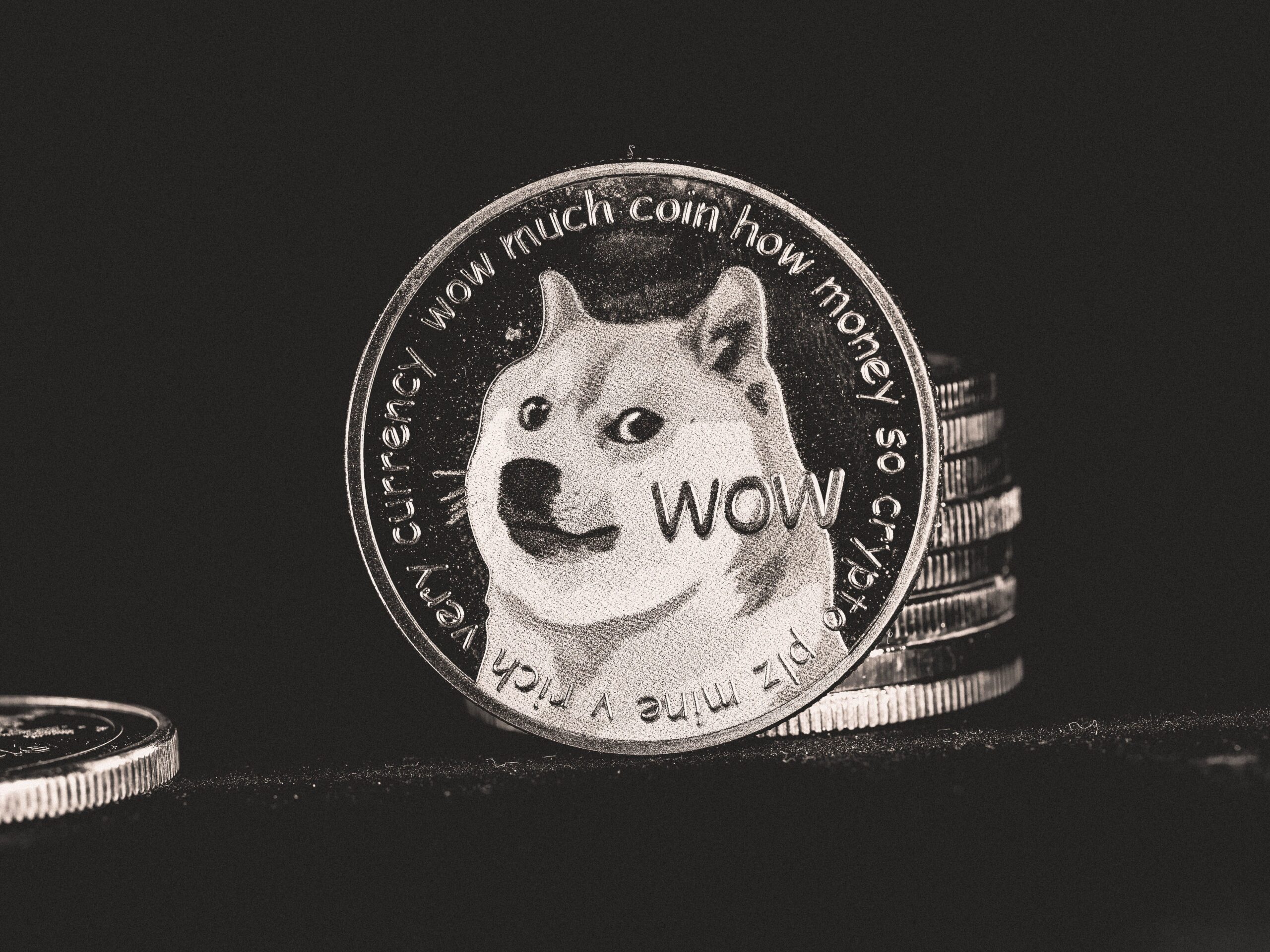
Dogecoin began in 2013 as a joke based on the viral Shiba Inu ‘Doge’ meme, before evolving into a cryptocurrency with a market value of billions of dollars.
What the Internet Forgets
It’s an unsettling thought: future historians could find themselves surrounded by evidence and still unable to read it. They may well find it easier to read a three thousand year old Greek tablet than a Microsoft PowerPoint presentation created in 2026. This possibility runs against one of our most persistent beliefs about digital life: that “the internet never forgets”. In an age of resurfaced tweets, rediscovered photographs and screenshots that outlive the posts they captured, the phrase can feel less like a cliché than a warning about our digital footprints. Once something attracts enough attention, it becomes almost impossible to erase. Copies escape across platforms, private messages become public, and an ill-judged comment can return years after its author believed it forgotten.
Yet this is a classic case of survivorship bias. We notice the things that survive because, by definition, they are still visible. The internet is exceptionally good at preserving whatever millions of people choose to copy, screenshot and share. Everything else – the ordinary conversations, abandoned forums and countless small corners of online life– is far more fragile. What is forgotten tends to disappear without announcing its departure. The digital record may therefore appear inexhaustible not because it preserves everything, but because we cannot easily perceive the scale of what has already been lost.
The Ruins of the Early Internet
Archivists have been warning about this possibility for decades. In 1997, Canadian information specialist Terry Kuny warned that we were entering a “digital dark age”. He imagined a future in which enormous quantities of knowledge became inaccessible, not because civilisation had collapsed, but because the technologies and institutions required to preserve them were themselves remarkably short-lived. “We are moving into an era,” he wrote1, “where much of what we know today, much of what is coded and written electronically, will be lost forever.” At the time, the internet was still young enough for this warning to sound premature. The web appeared to be expanding, not disappearing. New pages were arriving faster than anyone could count them, and the promise of digital storage seemed almost limitless.
Almost 30 years later, it is increasingly clear that Kuny was right. The internet of the 1990s and early 2000s has already become difficult to reconstruct. Its remains linger in broken links, partial screenshots and memories of websites whose names have nearly vanished from search results. GeoCities is perhaps the most famous example. Long before social media gave everyone a profile, the platform allowed users to build their own small plots of the web: fan pages, family histories, memorials, collections of poetry and exuberantly decorated shrines to almost every imaginable hobby. At its height, it contained some 38 million user-created pages. Then, in 2009, Yahoo shut it down2.
Volunteer archivists raced to copy as much as they could before the deadline, eventually salvaging a substantial portion of the platform. What they preserved offers an extraordinary glimpse of the early web, complete with flashing text, impossibly colourful backgrounds and animated GIFs. But it is still only a glimpse. Countless homemade pages disappeared, while many of those that survived lost the links and context that once connected them to a living community. GeoCities remains accessible today less as an intact city than as a partially excavated ruin.
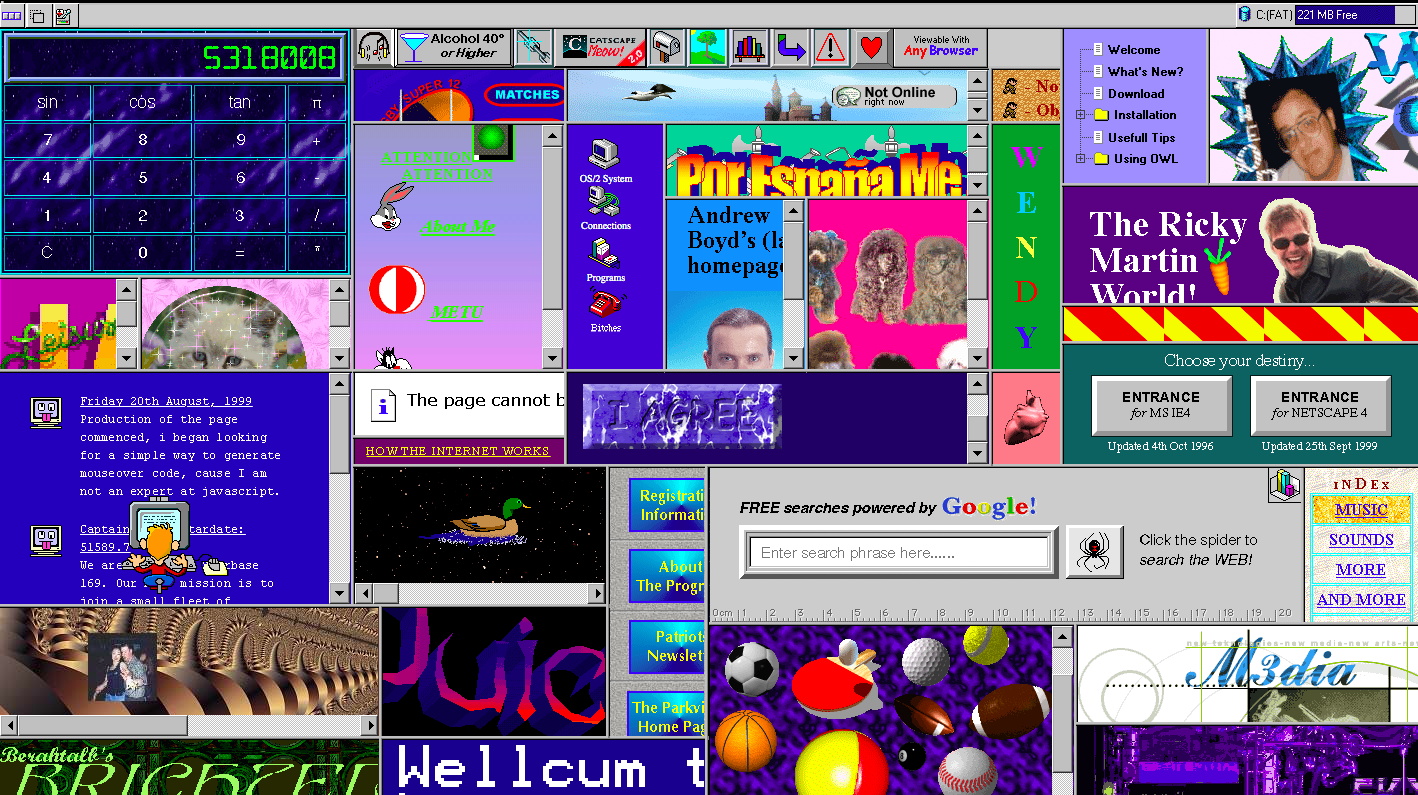
Cameron’s World, a web collage assembled by Cameron Askin from text and images excavated from thousands of archived GeoCities pages. The project preserves the nostalgic, deeply personal visual culture of the early web. Explore Cameron’s World.
Other losses have left scarcely even that. I still occasionally think about Avenue7, a fashion website popular amongst teenage girls where users assembled outfits from images of clothes years before Pinterest boards existed. I would rush home from school to create collages and browse those made by other users. Today, the website is gone, and searching its name brings back little more than a few orphaned images and scattered references. An online community vivid enough to occupy countless hours of my childhood has been reduced to a handful of digital traces.
This is what online disappearance usually looks like. Most websites do not vanish in events dramatic enough to become news. The hosting fees go unpaid, a company quietly withdraws a service, or an administrator stops renewing the domain. Sometimes the homepage remains while individual articles and images disappear behind it. Meanwhile, the internet continues to look full because new material rushes in to replace what has been lost.
The scale of this turnover is surprisingly large. In 2024, the Pew Research Center examined a random sample of nearly one million webpages and found that a quarter of all the pages accessible at some point between 2013 and 2023 had disappeared by October 2023. Age mattered: 38 per cent of the pages that had existed in 2013 were no longer available a decade later. Most had not vanished because entire websites collapsed. The individual page had simply been deleted or removed from an otherwise functioning site3.
Archivists call this process “link rot”. Its effects extend far beyond abandoned blogs and forgotten online communities. Pew found inaccessible links on government websites, Wikipedia reference pages and news sites. The same study found that more than half of Wikipedia pages contained at least one broken link in their references. This is the peculiar shape of the digital dark age. It is not an empty period from which no records survive. On the contrary, it arrives amid an overwhelming abundance of information. New pages appear as old ones vanish, leaving us with an archive that continues to grow while developing gaps almost everywhere beneath the surface. To understand how a civilisation can lose its memory while barely noticing, we need to return to the most famous lost archive of all.
Alexandria Wasn’t Destroyed in a Day
When we imagine knowledge being lost, one image tends to eclipse all others: the Library of Alexandria consumed by flames. As the astronomer Carl Sagan described it, Alexandria was once “the brain and heart of the ancient world”, a place where scholars gathered and where a great repository of humankind’s knowledge was accumulated 4. According to the popular version of the story, the great library vanished in a single night, its scrolls reduced to ashes in one spectacular inferno. The reality appears to have been both less dramatic and, perhaps, more unsettling.
The Library of Alexandria was not simply a building filled with scrolls, but part of the Mouseion: a state-funded scholarly institution supported by the Ptolemaic rulers. Its survival depended not only on its collection, but on the money, scholars and scribes required to maintain it. Precisely how this institution disappeared remains uncertain, since the surviving accounts are fragmentary and often contradictory. There is, however, good evidence that a fire started during Julius Caesar’s campaign in Alexandria in 48 BC damaged part of the city’s collections. But many historians now believe this was not the Library’s final act. In fact, there was probably no final morning on which the people of Alexandria awoke to discover that their civilisation’s memory had disappeared. Instead, Alexandria seems to have declined over generations. Political upheaval, shrinking patronage, changing rulers and simple neglect gradually eroded the institution. Scholars dispersed, collections were scattered and the work of preserving knowledge gradually slowed until, somewhere along the way, the institution ceased to exist in any recognisable form 5,6.
Whether Alexandria ever contained anything close to “all human knowledge” is almost beside the point. The Library has endured because it embodies a fear that every civilisation eventually confronts: that knowledge accumulated over generations can become inaccessible to those who come after. Ironically, the familiar myth of its destruction obscures the more important lesson: knowledge rarely disappears all at once. More often, it slips away so gradually that nobody notices. In many ways, the internet is Alexandria rebuilt on an unimaginable scale. As of June 2026, there are almost 1.5 billion sites on the web 7. But sheer scale will not free it from the dependency that doomed its ancient counterpart. The web also requires money, labour, infrastructure and sustained institutional attention. If it declines, our archive will probably disappear as Alexandria did: one small loss at a time.
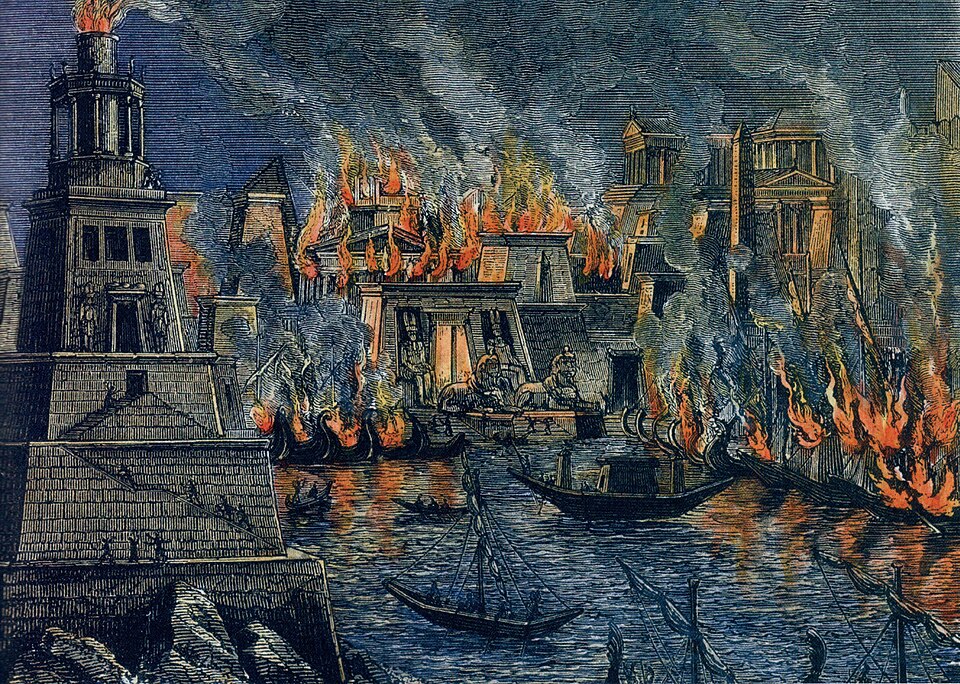
Hermann Göll’s 1876 vision of the fire of Alexandria (Public domain). The Library’s actual decline was probably far less dramatic.
The Physics of Forgetting
The history of Alexandria seems, at first, to confirm something we already know: physical libraries are fragile. Scrolls burn, ink fades and paper rots. Even under ideal conditions, every physical object bears the accumulated effects of time. The internet, by contrast, should be almost immortal. Unlike a manuscript copied by hand, a digital file need not deteriorate as it is reproduced. A photograph, email or website can ultimately be represented as a sequence of binary digits—a huge string of 1s and 0s. Copy those bits accurately and the millionth version will be mathematically identical to the first. In principle, the information can pass from one machine to another indefinitely without acquiring so much as a stain. So then, why are we losing so much of it?
The answer has surprisingly little to do with the information itself. The fragile part is not the bits, but everything surrounding them. Every bit must be embodied somewhere, as a magnetic orientation on a hard drive, an electrical charge in a transistor or a microscopic marking on an optical disc. These storage materials can decay slowly over time and, even worse, the devices needed to read them can become obsolete remarkably quickly 8. You may still have an old iPhone model lying in a drawer somewhere—but could you find the right charger?
Physicists recognise this as a familiar pattern. According to the Second Law of Thermodynamics, entropy—the number of possible arrangements available to a system—tends to increase 9. This does not mean that order can never arise. Organisms grow, crystals form and humans build libraries. But maintaining a particular organised state requires a continuing flow of energy and work. Stop repairing a house and water enters through the roof. Leave a bicycle in a shed and oxygen slowly converts its metal to rust.
Digital information lives inside precisely this kind of system. Even when the strings of 1s and 0s remain intact, the technological world around them is in constant motion. Servers need electricity and cooling. Storage devices must be monitored and replaced. Files must be migrated into new formats, catalogues updated and corrupted copies repaired. Behind the apparent effortlessness of “the cloud” lies an enormous physical infrastructure—and an equally important network of technicians, archivists, companies and public institutions keeping it in operation.
Entropy is not a literal explanation for every broken link. A company that closes a platform has simply made an economic decision, and is not obeying a mysterious command from some dark physics overlord. But the Second Law helps expose the fantasy behind digital permanence: the belief that once information has been “Saved”, it will remain Saved without further intervention. Preservation is not an action completed in the past. It is a process that must continue for as long as we want the information to survive.
Who Decides What Survives?
None of this means that the internet has simply been left to decay. For decades, organisations such as the Internet Archive have crawled the web, capturing snapshots of pages that might otherwise disappear. National libraries, universities and volunteer archivists maintain collections of their own, while projects devoted to obsolete software and abandoned online communities attempt to rescue fragments of digital culture before they vanish. But trying to preserve all digital content is a Sisyphean task. The internet expands far faster than any institution can catalogue it, and even automated crawlers must decide which pages to visit, how often to return and how many versions to retain. Private messages, password-protected communities and obscure websites may never be captured at all. Resources are finite; every act of preservation therefore contains an act of selection10.
That selection is never entirely neutral. Institutions are more likely to preserve what they already recognise as valuable, while popular material survives through sheer repetition. The quieter parts of digital life—the small forums, personal blogs and ordinary conversations that may tell future historians most about how people actually lived—are often the easiest to lose. What remains will not necessarily be a representative portrait of our civilisation, but one shaped by institutional priorities, commercial incentives and chance.
Lost in the Digital Undergrowth
The internet, then, is less like a conventional library than a garden. Books can sometimes endure astonishing periods of neglect: the Dead Sea Scrolls lay in desert caves for almost two thousand years before they were rediscovered 11. A garden cannot be abandoned in the same way. There is no single dramatic moment when it collapses. Paths disappear beneath weeds, flowers give way to brambles, and eventually it becomes difficult to distinguish what was deliberately planted from what simply grew there.
The web behaves in much the same way. Neglect does not merely empty the archive; it buries it beneath statistical noise. Broken links interrupt the paths between sources. Identical pages are copied across different domains. Abandoned websites are replaced by domain resellers, spam content farms and oceans of AI-generated text, each competing for attention while contributing almost nothing to the historical record 12. The archive is not depleted so much as overgrown, until the genuinely valuable becomes increasingly difficult to separate from the digital undergrowth. Jorge Luis Borges imagined something similar in The Library of Babel, a near-infinite collection containing every possible book. Somewhere within it lay every truth that could ever be written—but surrounded by “leagues of senseless cacophonies, verbal jumbles and incoherences” 13. The library possessed all knowledge and yet left its inhabitants almost incapable of finding any of it.
A digital dark age may therefore look nothing like darkness. It may be dazzlingly abundant: an archive that continues expanding even as its pathways decay and its origins become obscure. That, perhaps, is the deeper lesson to be learned from history and physics. The internet is not fighting entropy because its files mysteriously dissolve with age, but because preserving an organised archive is never a one-time achievement. Its decline is unlikely to provide future historians with a single conflagration to mourn. Left unchecked, the web will not vanish in a cyberattack or Hollywood-style apocalypse. It will simply grow wild.
Suggested Reading
Articles:
- Jill Lepore, “The Cobweb: Can the Internet Be Archived?”, The New Yorker (2015). A vivid account of the ambitions and limitations of the Internet Archive.
- Adrienne LaFrance, “Raiders of the Lost Web”, The Atlantic (2015). An accessible investigation into link rot and attempts to repair the disappearing web.
- National Geographic, “What really happened to the Library of Alexandria?” (2025). A readable overview of the competing accounts of the Library’s destruction and decline.
Literature:
- Susanna Clarke, Piranesi (2020)
A haunting novel about memory, knowledge, and the preservation of a world through careful record-keeping. While not about the Library of Alexandria directly, it captures many of the same themes of archives, loss, and what survives the passage of time. - Jorge Luis Borges, The Library of Babel (1941). A literary counterpart to the essay’s final argument: a library may contain every possible truth and still overwhelm its inhabitants with meaninglessness.
References
[1] Kuny, T. (1997). “A Digital Dark Ages? Challenges in the Preservation of Electronic Information.” Paper presented at the 63rd IFLA General Conference, Copenhagen. Available via the Internet Archive: https://archive.org/details/63kuny1
[2] Internet Archive (2009). “GeoCities, Preserved!” https://blog.archive.org/2009/08/25/geocities-preserved/; Scott, J. (2009). “Ghost Pages: A Wired.com Farewell to GeoCities.” Wired, 3 November. https://www.wired.com/2009/11/geocities/
[3] Chapekis, A., Bestvater, S., Remy, E. and Rivero, G. (2024). “When Online Content Disappears.” Pew Research Center, 17 May. https://www.pewresearch.org/data-labs/2024/05/17/when-online-content-disappears/
[4] Sagan, C. (1980). Cosmos. New York: Random House.
[5] El-Abbadi, M. (1990). The Life and Fate of the Ancient Library of Alexandria. Paris: UNESCO.
[6] MacLeod, R. (ed.) (2000). The Library of Alexandria: Centre of Learning in the Ancient World. London: I.B. Tauris.
[7] Netcraft (2026). “June 2026 Web Server Survey.” https://www.netcraft.com/blog/june-2026-web-server-survey
[8] Digital Preservation Coalition. “Preservation Issues.” Digital Preservation Handbook. https://www.dpconline.org/handbook/digital-preservation/preservation-issues
[9] OpenStax (2016). University Physics, Volume 2, sections 4.6–4.7, “Entropy” and “Entropy on a Microscopic Scale.” Rice University. https://openstax.org/books/university-physics-volume-2/pages/4-6-entropy
[10] Internet Archive. “Using the Wayback Machine.” https://help.archive.org/help/using-the-wayback-machine/; Digital Preservation Coalition. “Preservation Action.” Digital Preservation Handbook. https://www.dpconline.org/handbook/organisational-activities/preservation-action
[11] Israel Museum, Jerusalem. “The Dead Sea Scrolls.” https://www.imj.org.il/en/wings/shrine-book/dead-sea-scrolls
[12] Shumailov, I. et al. (2024). “AI models collapse when trained on recursively generated data.” Nature, 631, 755–759. https://doi.org/10.1038/s41586-024-07566-y
[13] Borges, J.L. (1941; English trans. J.E. Irby). “The Library of Babel.” In Labyrinths: Selected Stories and Other Writings. New York: New Directions, 1962.